A collection of my columns under The Newfoundland Inkslinger banner that were originally published by the Lloydminster Meridian Booster in 2008. This post will be revised frequently as I update and expand it. Please note that due to multiple moves and digital transfers over the years, some articles may have been misplaced. These pieces of writing have been frozen in time, so opinions and personal views may have changed since original writing.
LLOYDMINSTER: REFLECTING TWO YEARS LATER
Originally Published in the Lloydminster Meridian Booster, Alberta
January 2008
As I sit in my recently-renovated apartment with a Tim’s coffee, I reflect upon my first two years in Alberta.
Two years ago today, I arrived in Lloydminster on a Greyhound bus. Due to my previous newspaper job in the Northwest Territories going seriously awry, I decided to come here for awhile to get my bearings back. It was a cold snowy day on January 16, 2006 as my cousin picked me up at the bus station downtown. A new adventure in the Border City beckoned me. For the most part, my Albertan hosts have treated me well.
For the most part.
Reading something recently that caused a bit of a fiery discussion, I sometimes wonder. I do hope that specialties such as this column and the East Coast Kitchen Party radio show on Lloyd FM are not resented by non-Newfoundlanders and is considered a regionalist threat. I can’t really see why. The columns, the radio show and other events are put together for fun, and to give us a sense of grounding. I do hope that my columns aren’t too maudlin. Not that we’re lonely. We’re not by any means. It’s been my experience that Newfoundlanders naturally draw together, no matter where in the country or world you are. I’ve been to friends’ places here in Lloydminster, and especially after the lovely renovation job to my apartment, I’ve had friends over. Whether you’re from Carbonear, Red Head Cove, Northern Bay, Robert’s Arm, or Heart’s Desire, you always know someone. Is it because we’re from a small island, and it’s our instinct?
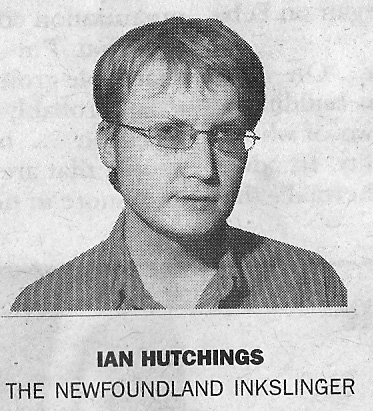
There’s a lot of us here, there’s no doubt about it. Are we helping to build a city – and ultimately a province – that will never know our names, our contributions? Never! My ugly mug and byline on this page you’re reading directly contradicts that. Go to local big retailers here in Lloyd and many of the nametags on the employees are the names of Newfoundlanders. There’s at least one liquor store in the city that is owned and operated by Newfoundlanders. We are here, our presence solid, helping the Albertan economy.
The fish are supposedly gone (but being a renewable resource, will return), and some of the fishers have jumped ship into the oil patch. I do know that the oil patch brings big money and long hours. With the big money comes the temptation of illegal drugs. Anyone, no matter where you’re from, can fall into the grip of the addiction – which over time will destroy your friendships and ultimately, yourself.
Calling me a “Newfie” makes me cringe. I’ve yet to be called a stupid Newfie, or a goofy Newfie – at least not to my face.
I’m aware that there are many Newfoundlanders who proudly call themselves “Newfies”, and I’m fine with that. It has different meanings to different people. I personally prefer Newfoundlander. Newfie is mainly considered derogatory because the word is associated with “Newfie jokes”, jokes told and retold all over Canada since the Dominion of Newfoundland government went bankrupt during the Great Depression. The jokes almost always depict Newfoundlanders as stupid, lazy or both. The “sterotypical Newfie” is known as chronically drunk, lazy, talks with a funny accent, sometimes wears a Sou’Wester. Any society has people like this (The Sou’Wester, of course, is a hat worn by fishermen made of flexible waterproof materials that repels water). In reality, Newfoundlanders and Labradorians have it in their blood to work hard. We’re not Maritimers – that’s what people from Nova Scotia, Prince Edward Island and New Brunswick are referred as. It’s often confused.
I’m a Newfoundlander, and my recent Christmas trip home has reinforced my pride.
See you next month, b’ys.
Stitching the fibres of democracy
Originally Published in the Lloydminster Meridian Booster, Alberta
February 2008
The Dominion of Newfoundland was a highly polarized society, marked by distinct cleavages between Roman Catholics and Protestants, Liberals and Conservatives, descendants of Irish and West Country English, rich merchants and poor fishermen and tradesmen, and rural Newfoundland versus St. John’s (or alternatively the Avalon Peninsula against the rest of the Dominion’s districts). This often manifested itself in hotly contested and even violent elections. Various reforms in the 1860s and 1870s (during which Newfoundland rejected confederation with Canada) quelled the often hostile nature of this polarization.
With various exceptions throughout its Dominion history, class, religion and political parties tended to align such that Irish Catholics tended to support the Liberal Party and English Protestants tended to support the Conservative Party.
As a result of the Great Depression, Newfoundland’s economy deteriorated. This resulted in a famous episode in 1932 when a large riot erupted at the Colonial Building and then Prime Minister Richard Squires narrowly escaped. The Dominion assembly approved the recommendations of the Amulree Commission the following year and voted itself out of existence in order to be replaced by an appointed Commission of Government. This Commission was effectively an appointed council with a British Governor and six commissioners from both Britain and Newfoundland. The Commission oversaw slow growth during the beginning of its reign, but Newfoundland began to thrive during World War II.
It was shortly after the Second World War that a Newfoundland National Convention was created in order to deliberate the constitutional future of Newfoundland. Two referendums were initiated in the year 1948. In the first, Newfoundlanders were asked to vote on whether to join Canada as a province, return to an independent dominion with responsible government, or continue with an appointed Commission. In the second referendum, Newfoundlanders were asked to choose between responsible government and confederation with Canada. The movement for responsible government tended to be weaker, less organized in rural areas, and had some divisions stemming from many of its members supporting a special economic union with the United States. Newfoundland’s voters narrowly voted in favour of confederation and in 1949 Newfoundland joined Canada as it’s tenth province.
Since Confederation in 1949, Newfoundland has been under control of Liberals and PCs. Newfoundland and Labrador has what can be described as a “two-and-a-half” party system, with two parties capable of forming government (Liberals and Progressive Conservatives) and one small party that does not (the New Democratic Party).
I see from following the local media that Alberta is in the midst of an election campaign. I’ll admit that I’m not paying much attention to it. Not being from around here, there’s not a great deal about the campaign that interests me. Since 1971, Alberta has been under the Tories’ iron fist – a total of 36 years. It may be time for a change. There are many Albertans who’ve grown up under one government.
I’ve grown up under several in Newfoundland. I was born under Progressive Conservative rule but lived under the Liberals for most of my life, being bookended by Conservatives. Change is good for any society. Under 15(?) years of Liberal rule, things got stale. Then from out of the blue comes a non-politician -lawyer and businessman Danny Williams- to shake things up. Maybe this province needs a similar shake-up – if it wants to maintain control of its rich resources. The foundations were set by previous governments, but were allowed to slide by mismanagement. I’ll predict that Newfoundland’s Golden Age is beginning in a similar fashion as when Ralph Klein ran Alberta.
A firm grip needs to be at the helm – one who is not afraid of surfing tidal waves – as the Big Oil trickles. Does Stelmach have what it takes?
Take my province for example.
Either someone needs to come along with new ideas, or the politically lacklustre “Steady Eddy” has to get his act together. Otherwise, when your oil runs dry, you guys could very well be migrating East – to Newfoundland and Labrador. We will surely make you welcome, because that’s how our society is. But your jokes towards us over the years will never be forgotten.
Good luck to all the candidates. I’ll be a detached viewer of the proceedings.
See you next month.
The Confederation Controversy
Originally published in the Lloydminster Meridian Booster, Alberta.
March 2008
“Hurrah for our own native Isle, Newfoundland-
Not a stranger shall hold one inch of her strand;
Her face turns to Britain, her back to the Gulf,
Come near at your peril, Canadian Wolf!”
-A verse from an anti-Confederation song written anonymously in 1869
One of the greatest issues Newfoundlanders had to face as a nation is Confederation with Canada, with the debate raging for over 59 years.
On 11:56 p.m. on March 31, 1949, Newfoundland joined Canada. Since Canada’s new citizens awoke the next day to a dawning new era, April 1 is the more common date of reference. The Booster doesn’t publish on that date, so March 31 is more convenient for me.
51 per cent to 49 per cent.
These were the results of the second referendum that brought Newfoundland into Confederation. The choices offered was union with Canada and independence.
The first referendum, which offered a choice between responsible government, independence and union with Canada was also close.
There were also supporters for union with the United States. Canada would have balked at that – the country would be surrounded by the main body of the U.S. to the south, the state of Alaska to the north and the state of Newfoundland to the east. I’m personally glad we didn’t join the States. Having Bush as our President makes me shudder.
Arguments against Confederation included:
For nearly 400 years, Newfoundlanders had made a life for themselves. We had our own way of doing things. Joining Canada would create a great upheaval. We would lose our special place in the world, erasing our history and heritage – our traditions, our ways, our unique customs.
Joining Canada would result in thousands of our young people leaving Newfoundland to find jobs in Canada.
Arguments for Confederation included:
- Family allowances. A cheque comes in the mail every month providing money for every Newfoundland child under 16. Money for food and clothing for the children.
- The children won’t need to worry about not having decent winter coats and boots ever again. The Canadian government money will help see the new province through the thin times.
- Old age pensions. The Canadians pay a lot more and payments start when you’re 65.
- Veterans’ pensions. Canada will provide the money for their pensions and look after wounded and disabled war veterans.
So what happened? Why, after joining Canada, is Newfoundland nearly abandoned? With no economy, Newfoundlanders by the boatload began to leave for work, reducing the province’s population.
Under Canada’s mismanagement, the fishery died. Canada allowed foreign fishing fleets to deplete the Grand Banks, and Newfoundland’s once-abundant fishing grounds. The fishers had to abandon their craft. From the very beginning, Newfoundland governments were corrupted from within. The first premier, Joey Smallwood, while very skilled in the art of persuasion, proved himself to be gullible. His government was swindled several times.
With our offshore oil boom, things are finally in the process of turning around. Foundations are being laid for a prosperous future. The lighthouse beacons will soon shine out into the fog, guiding us home.
(No column published in April 2008. I was on holiday.)
WHEN THE SYSTEM FAILS US
Originally published in the Lloydminster Meridian Booster, Alberta.
May 2008
Every government needs its image tarnished. Despite Danny William’s reputation for building a new solid foundation for Newfoundland’s future, he and his government appear to be in hot water over a major health care crisis that’s been simmering for a few years. Hundreds of women’s lives are on the line thanks to a misdiagnosis.
For breast cancer patients, the “hormone receptor test” is the critical element in determining the course of one’s treatment. If a patient’s hormones stimulate the tumour, the patient is considered ER/PR (Estrogen Receptor/Progesterone Receptor) positive and is eligible to be treated with a hormone-blocking drug such as Tamoxifen.
The drug is considered the best hope for many patients.
Eastern Health decided to retest more than a thousand breast cancer patients who were diagnosed ER/PR-negative between 1997 and 2005. The review discovered hundreds of women who had missed their chance at getting Tamoxifen treatment.
Of the 1,013 breast cancer patients retested, 383 were found to be falsely ER/PR-negative. More than 100 of those wrongly tested patients are now dead.
An inquiry led by Judge Margaret Cameron revealed that not all of those affected were even notified that a mistake had been made.
I’ve been chasing this issue since I had a personal encounter with the faulty system in 2003, and making my name known in the local media.
Recall the incident in St. Joseph’s Hospital in Vegreville last year involving medical equipment that was improperly sterilized.
I was watching Global News over the long weekend and learned in Winnipeg, the toilets are not properly sanitized – causing a spread of c. difficile.
As of press time, the Saskatchewan Union of Nurses (SUN) are on standby to strike, but are in talks. They want to achieve a collective agreement that addresses patient and staff safety concerns, the critical shortage of nurses and the nurses’ professional working environment.
Responsibility is required. Canada supposedly has one of the best health care systems in the world. Does it? Why are there so many problems?
Wait times and health human resources are the issues on the hot seat.
Health care in Canada is funded and delivered through a publicly funded health care system, with most services provided by private entities.
In Canada, the various levels of government pay for about 70 per cent of Canadians’ health care costs. Under the Canada Health Act, the publicly-funded insurance plans are required to pay for medically necessary care – only if it is delivered in hospitals or by physicians. Coverage costs of outpatient prescription drugs, physical therapy, long-term care, home care, dental care and ambulance services are wildy different across the country.
Maybe the Williams government is covering something up. Or perhaps they are being more accountable and rooting out the old guard. I’m hoping time and Judge Cameron will tell. It’s unfortunate that those misdiagnosed women may not have that time.
CALL OF THE CUP
Originally published in the Lloydminster Meridian Booster, Alberta.
June 2008
(Factioid: This column is notable as it is the first column under the Newfoundland Inkslinger banner. Prior to this, the column series was titled Navigating the Issues.)
Last week I found myself following Stanley Cup Playoffs and checking stats regularly on TSN. If you know me, you know that I’m not a sports guy. Despite my brief stint as a stringer sports reporter for the Booster last fall, athletics never held my interest. Until now.
The main reason I was following these particular Playoffs was a source of patriotic pride (that, and for the fights). Detroit Red Wing #11 Dan Cleary is from Riverhead, Newfoundland and Labrador. His NHL roster dossier says he was born in my hometown of Carbonear – but raised in the small community of Riverhead. As the Playoffs progressed and the Wings racked up the wins, anticipation of victory binded Newfoundlanders and Labradorians together across the country and the world, via Facebook and satellite TV. When the Wings defeated the Pens in Game #6 with a 3-2 win, claiming the Cup, Riverhead and Dan Cleary became household names.
Despite its legendary status in the hockey world, the Stanley Cup has been the victim of many beatings and abandonments by the teams who coveted it. The following are just a few bizarre incidents I learned about while researching its history.
After the Ottawa Silver Screen won the Cup in 1905, one of the players claimed he could kick it across the frozen Rideau Canal. He drop-kicked it into the canal, and the team went on to party somewhere and left the Cup behind. They remembered the next morning and recovered it.
After the Habs won the Cup in 1924, they went to Leo Dandurand’s home for a champagne party. The car with the Cup had a blowout and the occupants left it on the road while they stopped for repairs. They somehow forgot about the trophy and drove off without it. They retraced their route and found it where they left it.
Clark Gillies of the 1980 New York Islanders allowed his dog to eat from it, and fellow Islander Bryan Trottier took the Cup with him to bed.
When the Oilers won the Cup in 1987, Mark Messier put it on stage with a stripper at the Forum Inn. He also took the Cup to various clubs and let fans drink from it.
The abuse ended in 1994. After the New York Rangers won for the first time in 54 years, they went beserk with it. I don’t have the room to list what they did to it, but according to Sports Illustrated it “was carried from bar to nightclub to ballpark to ballroom to racetrack to squad car to firehouse to strip joint.” The NHL had enough by this point and gave the poor Stanley Cup its own security force.
I assume one of these “Cup Cops” will be accompanying the big trophy as it travels to Newfoundland and Labrador for the first time this summer. I hear that there’s a big party planned for its arrival as Cleary takes it home.
Welcome to Newfoundland and Labrador, Lord Stanley.
REPORTING LIVE FROM NEWFOUNDLAND
Originally published in the Lloydminster Meridian Booster, Alberta.
July 2008
I’m looking over the ocean, squinting through the fog toward Ireland. I’m on Cape Spear, the furthest eastern point in North America. For the moment, I’m alone next to the restored lighthouse. While taking pictures of my family walking up the steps, I hear a roar from the sea. Two humpback whales puff and roll hundreds of feet below me, while a quarter of a kilometre away, a minke whale entertains tourists. The foghorn wails, warning off ships approaching the St. John’s narrows.
It’s the perfect way to kick off my summer vacation in my homeland, and the perfect image to start my first anniversary column with.
I’ve read news reports while living in Lloydminster, but now I can see with my own eyes that the seeds for a boom similar to Alberta’s is being experienced in the capital of St. John’s. Travelling around St. John’s, I’ve been noticing a greater number of “hiring” signs – mostly in the restaurant sector. The oil rigs are under construction, St. John’s is under development, and the workers need to be fed. The mall in my hometown of Carbonear has become much busier, but other than that, I can’t tell for certain yet if the effects have spread out to the smaller communities.
According to Peter Hall, Vice-President of Economics and Deputy Chief Economist with Export Development Canada (EDC): “Energy will actually subtract the province’s exports this year, largely as the result of lower production output and cooling prices before a rebounding in 2009,” Hall said in a press release. “The industrial goods outlook remains solid, while seafood and forestry will get a lift from a falling Canadian dollar in 2009.”
EDC is predicting a 4 per cent drop in energy exports this year, and a slight increase of 1 per cent in 2009. Crude production hit a record 134 million barrels last year, but each of the province’s three production facilities will see lower output in 2008. Hibernia will lead the decline, but with the potential development of Hibernia South this platform should be responsible for a solid rebound in 2009. There are reasons for optimism due to future development at White Rose and Hebron, the potential addition of a second refinery and ongoing deepwater drilling activity.
The agrifood sector accounts for 7 per cent of the province’s export total, with expected increases of 1.5 per cent and 5.5 per cent in 2008 and 2009, respectively. EDC Economics anticipates no major quota adjustments for key species such as crab or shrimp, but there is some upside for landings of lesser-valued ground fish. Fishers, especially those chasing shrimp, will still find market conditions very tough, as the exchange rate and high energy costs squeeze margins. The brightest light is the aquaculture sector, which should start to pay dividends in 2008. With significant coastline, there appears to be plenty of upside for this industry.
In other words, foundations are being laid – and there is hope.
As I clew up this column, the fog is finally lifting and the sun is shining. Just down the road from my childhood house, the big blue ocean is glittering. I’m going for a walk along the coast. Newfoundland’s weather can change in the blink of an eye, so I better take advantage of it!
Inkslinger over and out.
Newfoundland is bubbling to the top
Originally published in the Lloydminster Meridian Booster, Alberta.
August 2008
On Aug. 20, the final deal with Hebron was signed in St. John’s after two years of tense negotiations.
The government of Newfoundland and Labrador is estimating the province will gain at least $20 billion in royalties and up to 3,500 jobs from the Hebron offshore oil project.
So it begins.
There are three projects currently active offshore: Hibernia, Terra Nova, and White Rose.
*Hibernia is the name of a petroleum field located in the North Atlantic Ocean, approximately 315 kilometres southeast of St. John’s. It was discovered by Petro-Canada.
The production platform Hibernia is the world’s largest oil platform and consists of a integrated topsides facility mounted on a gravity base structure. Inside the gravity base structure are storage tanks for 1.3 million barrels of crude oil.
Exploration drilling to map the field began in the 1960s and continued into the 1980s, with the loss of the Ocean Ranger rig in the process. In the mid-1980s under Prime Minister Brian Mulroney, Hibernia would become one of a series of regional “mega-projects” that Mulroney’s government started across Canada during this time.
*Terra Nova is an oil field development project 350 kilometres off the coast of Newfoundland. Petro-Canada is the operator and 34 per cent interest holder in the Terra Nova oil fields.
Discovered in 1984 by Petro-Canada, the field is the second largest off Canada’s East Coast. This oilfield utilizes a ship called a Floating Reduction Storage and Offloading Vessel (FRSO). Production from the field began in January 2002.
*White Rose is an oil field development project 350 kilometres off the coast of Newfoundland. Husky Energy is the operator and 72.5 per cent interest holder in the White Rose oil fields.
Discovered in 1984, the White Rose offshore oil field is located in the Jeanne d’Arc Basin 350km east of St. John’s. This oilfield also utilizes an FRSO. Production from the field began in November 12, 2005.
Hebron, the new kid on the block, was discovered circa 1980-81, and will go into production in 2018 after the rig is built in Newfoundland. It’s owned by Chevron and the Government of Newfoundland and Labrador. This is the largest offshore project in the region since Hibernia.
The oil from the Hebron field will flow in 2018, but the spinoffs from construction will fire up the economy. Indeed, as I noticed when I was home this summer, there are already changes taking place in St. John’s. Recent news reports have confirmed my theories.
We can hope that abandoned communities will start to repopulate. I’m suggesting that the government begin a “heritage fund” and start saving immediately, as oil doesn’t last forever. I’m also suggesting that all roads on the island and Labrador be upgraded.
I was watching Discovery Channel’s “Secrets of the Deep” last week and during a feature on sperm whales it mentioned that fish congregrate around oil rigs. The bases of oil rigs seem to make excellent artificial reefs. Maybe this sounds completely absurd, but can this be harnessed somehow to bring the fishery back, and revitalize Newfoundland’s original industry?
Newfoundland and Labrador is officially a “have” province.
Now what?
Election frenzy
Originally published in the Lloydminster Meridian Booster, Alberta.
October 2008
North America is under siege by two simultaneous election campaigns. The gloves are off, and the politicians are scrapping. In the United States, Democrat Senator Barack Obama and Republican Senator John McCain are locking horns for the White House. In my eyes, Obama represents sweeping changes for the wartorn, debt-saddled country. McCain represents a continuation of Bush’s pathetic legacy – the road to ruin. The Republicans have got to go.
Here in Canada, we have five leaders firing barbs at each other in a race for the Prime Minster’s office. After being stuffed with turkey, we go to the polls on October 14 to vote in what is essentially an illegal election.
“Fixed election dates prevent governments from calling snap elections for short-term political advantage,” Prime Minster Stephen Harper said on May 26, 2006. “They level the playing field for all parties and the rules are clear for everybody.”
He went on to say that “fixed election dates stop leaders from trying to manipulate the calendar simply for partisan political advantage.”
This is the right season, wrong year. The next election should be taking place in fall 2009. Harper broke his own law.
When someone cheats, there is a major breach of integrity and trust. The underlying principle is the same whether it’s a guy cheating on a girl, or a politician cheating on his policies. Feelings are shattered and the trust is destroyed.
Newfoundland and Labrador Premier Danny Williams’ Anything But Conservative (ABC) campaign is starting to wear thin. He’s becoming dangerously close to obstructing democracy by telling people how he wants them to vote. As you’re no doubt aware from reading my columns I’m all for supporting my own province, but there’s major internal issues the provincial government should be focussing on right now. Yes, we are a “have” province now, thanks to the Hebron deal signed last month. Except the health care system is crumbling, the schools are full of mold, and Memorial University is without a president.
On the positive side, it’s nice to see a crusader forcibly defending Newfoundland’s interests instead of getting taken advantage of like so many premiers have in the past. If he wants someone to crusade the ideals of “ABC”, then perhaps he should pass it on to someone not affiliated with the government – and working with his cabinet (it’s supposed to be a team effort!), get on with his job of guiding Newfoundland to its destiny. When we’re so close to prosperity, cool heads are needed to navigate the vessel.
The back and forth sparring between the Liberals and the Conseratives have been going on forever. Harper’s a Bush clone, and Liberal Leader Stephane Dion is spineless. Green Party leader Elizabeth May is still fairly untested. Given the chance, I think NDP Leader Jack Layton could be a solid PM. He’s concise, clear, witty, has some good ideas and doesn’t back down. This country needs a shakeup.
In summary: be open to change, keep cool, be a team player and don’t break that sacred trust. Get out there and exercise your right to vote.
A FORTRESS DEEP AND MIGHTY
Originally published in the Lloydminster Meridian Booster, Alberta.
November 2008
At 11:11 on November 11, all presses and various bindery machines in the Booster‘s production departments were shut down to observe a moment of silence. The thrums, clanks, clatters, and talking ceased throughout the building. As I assumed a civilian stance of remembrance, my eyes fixated on the Hummer-sized two-colour press in the centre of the print shop.
In my mind, I dove beneath the cold Atlantic during World War II where packs of Nazi U-Boats hunted around the coast of Newfoundland.
The Dominion of Newfoundland in its strategic central location, was an ideal site for military bases. Built up properly, the island would be a very large, very formidable fortress with easy access to the mainland Canada/U.S. and Europe. Because of this potential, it was also a prime target of conquest for the Nazis. If they gained a foothold on the Rock and were able to expand their influence further west, North America would be crushed under the Iron Curtain. The image of the red swatiska flag being raised over the Colonial Building and Nazis marching through St. John’s saluting Hitler is a disturbing alternate universe to comtemplate.
The Allies had aircraft stationed in Newfoundland at Stephenville, Gander, Argentia and Torbay. As RCAF Station Torbay became fully operational early in 1942, its aircraft provided protection as far east as the Grand Banks, where many U-boats patrolled.
With the exception of Pearl Harbour, the Dominion of Newfoundland was the only part of North America to be attacked on the homefront. Newfoundland was in the war zone and there was always the threat of a direct enemy attack. Blackouts were implemented soon after the war began, and St. John’s had a scorched earth policy imposed on it. If invaded, the city would be evacuated and burned, denying the enemy anything useful.
People reported encounters with strange men on deserted roads who smelled of diesel fumes – presumably spies. In Labrador, a weather station was constructed by a U-boat crew who made it ashore for at least 28 hours. U-boats surfaced next to fishing boats to actually buy fresh fish. Bell Island (within sight of my hometown) was attacked several times by submarines with iron ore ships being sunk. One of the torpedoes was recovered by divers in 2000. The ferry S.S. Caribou was sunk during its run from North Sydney to Port Aux Basques. I remember reading an account in college about a nightclub being set afire in downtown St. John’s, presumably by Nazi sabotage. Three torpedoes were fired at St. John’s. One hit Fort Amherst and two more hit the cliffs below Cabot Tower. The impact of the torpedo blast broke every window in the building.
I snapped out of my reverie as the moment of silence came to an end. I’m thankful that my island wasn’t captured by the Nazis and used as a weapon against the mainland. Pure conjecture, but it’s a terrifying thought. Unfortunately, the guns really haven’t gone silent. They still rage throughout the world, with more death and destruction by the day. We are a violent species. Let’s not forget the sacrifices made then and now.
I powered up my small envelope duplicator, and went back to work.
The Controversy Surrounding Christmas
Originally published in the Lloydminster Meridian Booster, Alberta.
December 2008
Season’s greetings! Happy holidays! Rather generic, wouldn’t you say? Do I say season’s
greetings in the middle of summer, because it can apply. Summer is a season. Do I say happy
holidays when I take time off work? Well yes, because any time off work is happy. But that’s not
what I mean.
I’ve been avoiding the retailers as much as possible this year, opting to do most of my shopping
online safely in my cave of solitude somewhere in Lloydminster. Also, as I write this, a brutal
cold spell has set upon the Border City and area. The wind chill is currently hovering at -50, give
or take a few degrees. I’m not going out except for work and to get basic necessities. When I
ventured out before this chill, a friend’s concern pointed out a curious lack of the word
Christmas. Now I’m noticing it everywhere.
I was baptized by the Roman Catholic church, and I have United Church roots as well. I
understand that the origins of Christmas celebrates the birth of Jesus Christ, the son of
God. Because his mother Mary and his (stepfather?) Joseph couldn’t find adequate shelter in
Bethlehem, the baby was born in a barn among livestock. Three wise men (the Magi) bearing
gifts were guided to him by a star. Angels heralded his birth to a group of shepherds, probably
scaring the living daylights out of them. All in all, a fascinating story.
The underlying concept of Christmas is that Christ was a gift from God to the world, bringing in
turn the gift of redemption and everlasting life.
It’s unknown what the exact month was, but the Catholic Church figures that Christ was born on
the 25th. It’s likely that December was chosen so the Catholic Church could contend with rival
pagan rituals also held at that time of year. The December 21 winter solstice in the Northern
hemisphere is a traditional time of celebration among many ancient cultures.
Considering the current weather we’re experiencing I would have preferred that they decided to
have it during the summer solstice.
Symbols such as decorated trees, mistletoe, holly wreaths and yule logs all have non-Christian
origins. Christmas only recently adopted these long-standing winter traditions into its own
identity. Many non-Christians argue that the most accurate description of this season is the
“holiday” season, not the “Christmas” season, which only describes the religious celebration of Christ’s birth.
This censorship also includes Easter and Good Friday, where expressions such as “Spring
Holiday” are sometimes used to avoid a public mention of these celebrations. Why? Are the
groups responsible for the quiet censorship worried about somehow offending people? Surely
there are Scrooges out there who say humbug to it, but the majority won’t. Whatodds, I say.
I went back to Newfoundland last year, but this year I’ll be celebrating Christmas in Lloydminster
with some close friends. It’s always rough to be so far from home this time of year, but we’ll be
drawing strength from one another.
Merry Christmas, dear readers. See ye all next year.